Unfair Performance Review: How to Respond
Navigate an unfair performance review with composure & credibility. Learn to respond effectively, protect your career, and ensure a fair outcome.
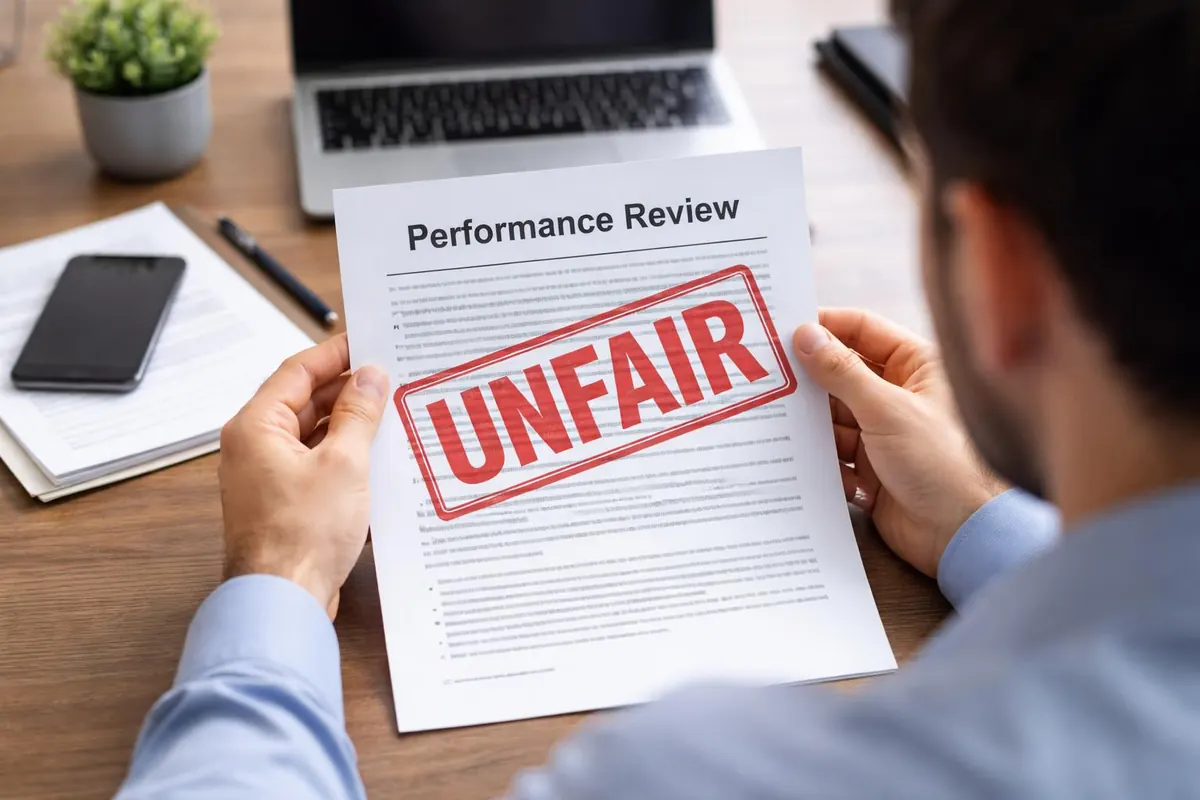
An unfair performance review can be a disheartening experience for any employee, potentially impacting morale, career progression, and even job security. This article delves into understanding, addressing, and ultimately overcoming the challenges posed by such evaluations, equipping you with the knowledge and strategies to navigate this complex professional hurdle effectively.
How Alygn approaches this. Alygn keeps a running record of the work itself: every task is scored as it is captured using the four-pillar method: the company goal, the team goal, the role, and the person's own KPIs. When review time comes, the evidence is already there — what each person actually delivered and how closely it served the strategy — so the conversation starts from the record rather than from memory or a rating scale.
Understanding Unfair Performance Reviews

What Constitutes an Unfair Performance Review?
An unfair performance review transcends a simple disagreement with an assessment; it typically involves a systematic bias, a lack of objective evidence, or a departure from established evaluation criteria. Employees feel their performance is misrepresented when the review doesn't align with their actual contributions or the expectations set for their role. A truly unfair performance review might stem from a manager’s personal bias, a misunderstanding of an employee's responsibilities, or an inconsistent application of the performance management system. When employees feel that their hard work is not being recognized accurately, it can lead to significant demotivation and a sense of injustice within the organizational structure.
Common Signs of Unfair Evaluations
Several indicators can signal an unfair performance evaluation. One common sign is a lack of specific examples to substantiate claims of poor performance, where the manager's feedback is vague and generalized rather than providing constructive, actionable insights. Inconsistent review consistency across team members or a sudden downturn in your performance review without prior regular check-ins or warnings can also be red flags. Another significant sign is when the evaluation criteria seem to shift arbitrarily or are applied unevenly, making it difficult for the employee to understand how to improve performance. If the review period is not clearly defined, or if the manager focuses solely on recent events rather than the entire review period, it might suggest an unfair review.
Impact of Negative Performance Reviews
The repercussions of a negative performance review, especially one that employees feel is unfair, can be far-reaching and detrimental. Beyond the immediate impact on an individual's morale and confidence, such reviews can impede career progression, affect eligibility for promotions or raises, and even lead to a performance improvement plan (PIP) that feels unwarranted. An unfair performance review can also damage the trust between managers and employees, fostering a hostile work environment and increasing employee turnover. From an organizational perspective, a widespread perception of unfair performance evaluations can undermine the entire performance management system, reducing engagement and overall employee performance, as noted by organizations like Gallup, which highlight the importance of fair and consistent evaluations to help employees thrive.
Strategies for Responding to Unfair Performance Reviews

Preparing Your Response
When faced with an unfair performance review, meticulous preparation is paramount before engaging in any dialogue. Begin by thoroughly reviewing the entire document, scrutinizing each point to identify specific instances where you believe the evaluation criteria were misapplied or where claims of poor performance lack concrete evidence. Gather all relevant documentation, such as project completion reports, emails praising your work, or records of positive feedback, to counter any unsubstantiated criticisms. It is crucial to formulate a clear, objective rebuttal that focuses on facts and specific examples rather than emotional responses, ensuring your arguments are well-supported and persuasive when you articulate why you don’t agree with the assessment. This initial groundwork sets the stage for a constructive dialogue and helps you to improve performance going forward.
Constructive Dialogue with Management
Initiating a constructive dialogue with your manager is a critical step in addressing an unfair performance review. Request a meeting to discuss the review, framing it as an opportunity to gain clarity and understand areas for improvement, even if you feel the reviews are unfair. During this meeting, present your documented evidence calmly and professionally, focusing on specific examples that illustrate your best performance and refute the manager’s assertions of poor performance. Be open to receiving feedback, even if it is challenging, and aim to understand their perspective. The goal is to reach a mutual understanding and, ideally, to revise the performance review to reflect your true contributions more accurately. This approach also helps to maintain a professional relationship between managers and employees.
Documenting Your Achievements
Ongoing documentation of your achievements is an indispensable strategy for navigating the performance management system, particularly when anticipating or responding to an unfair performance review. Maintain a detailed record throughout the review period of all significant accomplishments, positive feedback received, and instances where you exceeded expectations, ensuring you have a specific example for every claim of your performance. This proactive approach ensures you have concrete evidence to present during your annual review or in discussions regarding any negative performance review. Such meticulous record-keeping not only helps to counter claims of poor performance but also provides valuable insights into your overall employee performance, strengthening your position and demonstrating your consistent contributions to the organizational goals and evaluation criteria.
Improving Performance Post-Review
Identifying Areas for Improvement
Even after addressing an unfair performance review, it is crucial to proactively identify legitimate areas for improvement to help employees enhance their employee performance. This involves objectively analyzing the feedback received, distinguishing between biased criticisms and valid points that could genuinely improve performance. While you may still believe parts of the review are unfair, a constructive approach involves looking for any threads of truth or potential growth opportunities. Engaging in self-reflection and perhaps seeking input from trusted colleagues or mentors can provide an outside perspective, helping to pinpoint specific skills or competencies that could be strengthened. This focused approach ensures that any subsequent performance evaluations are based on demonstrable progress and a commitment to best performance.
Setting Goals for Best Performance
To truly improve performance and move past an unfair performance review, setting clear, measurable, and achievable goals is essential. These goals should directly address the identified areas for improvement, providing a roadmap for enhanced employee performance. Collaborating with your manager, if the relationship allows for it, to establish these objectives can ensure alignment with organizational expectations and help to mitigate future misunderstandings regarding evaluation criteria. These goals should be specific, outlining what needs to be accomplished, and time-bound, setting a realistic deadline for achievement. Regularly tracking progress against these goals not only reinforces accountability but also provides concrete evidence of your dedication to achieving your best performance, which can be invaluable during your next annual review.
Leveraging Performance Management Systems
Modern performance management systems and performance management software can be powerful tools for overcoming the aftermath of an unfair performance review and fostering continuous improvement. By actively utilizing these platforms, employees can maintain a detailed record of their contributions, gather specific examples of their work, and ensure that their progress is visible and well-documented throughout the review period. This proactive engagement with the performance management system helps to ensure review consistency and provides objective data that can counteract subjective or biased assessments in future performance evaluations, supporting a fair and transparent performance review process.
Best Practices for Future Performance Reviews
Ensuring Review Consistency
To mitigate the likelihood of an unfair performance review, establishing and adhering to clear review consistency across all performance evaluations is paramount. This means ensuring that the same evaluation criteria are applied uniformly to every employee, regardless of their role or the specific manager conducting the review. Organizations should invest in robust training for managers to help employees understand how to objectively evaluate performance, minimize personal biases, and consistently use the performance management system. Regular calibration meetings among managers can further enhance review consistency, allowing them to discuss and align on evaluation standards, thereby reducing instances where reviews are unfair and fostering a more equitable performance review process for all.
Creating a Culture of Constructive Feedback
Fostering a culture of constructive feedback is essential for moving beyond the reactive phase of addressing an unfair performance review and proactively building a positive work environment. This involves regular check-ins and open communication between managers and employees throughout the review period, not just during the annual review. Managers should be trained to deliver feedback that is specific, actionable, and focused on development, rather than simply pointing out poor performance. When employees feel consistently supported and receive balanced feedback, they are more likely to improve performance, take ownership of their growth, and trust the performance management system. This continuous dialogue helps to prevent surprises in the annual review and ensures that performance evaluations are perceived as fair and growth-oriented.
Implementing Fair Evaluation Criteria
Implementing fair evaluation criteria is the bedrock of any credible performance management system and is critical for avoiding an unfair performance review. These criteria should be clearly defined, communicated transparently to all employees, and directly tied to job responsibilities and organizational goals. It is important that the evaluation criteria are objective and measurable, allowing for a specific example of performance to be assessed against established benchmarks, rather than subjective opinions. Regular review and updates of these criteria are necessary to ensure they remain relevant and unbiased. When evaluation criteria are equitable and applied consistently, employees feel that the performance review process is just, fostering greater trust in management and driving overall employee performance.
Why Performance Reviews Feel Unfair
Many employees ask why performance reviews feel unfair. Common reasons include unclear expectations, inconsistent standards between managers, bias in rating, infrequent feedback, and a focus on past mistakes instead of future growth. When reviews lack transparent criteria and regular communication, employees interpret judgments as subjective or arbitrary, which erodes trust and engagement.
To make reviews fairer, organizations should set measurable goals, train managers on unbiased evaluation, provide continuous coaching, and use data to support decisions while preserving human judgment. Introducing AI tools can help standardize criteria and surface relevant performance signals, but they must be implemented thoughtfully to avoid reinforcing existing biases.
Click here for free AI performance management training to learn practical steps for creating fairer, more effective reviews and how to use AI responsibly in your process.
Where Alygn fits
Alygn is built for the version of this problem that most teams actually have: no reliable record of the work, so reviews run on recollection. Because Alygn scores every task against the company goal, the team goal, the role and the person's own KPIs — the four-pillar method — the evidence for a review accumulates during the year, task by task. Reviews become a reading of that record, and the bias that comes from remembering the last month more than the first eleven has less to feed on. See evidence-based performance reviews, or the guide for how it works day to day.
Run this session with us instead
Everything above is the version you run yourself. If you'd rather not facilitate your own planning session, we'll run it with you free — you leave with an agreed North Star, a KPI structure from company down to individual, and a plan your team can actually execute.
Book a free planning workshopKeep reading
Why a Performance Review and Annual Performance Review Don’t Work for Teams Anymore
Discover reasons why annual performance reviews don't work. Learn why traditional performance reviews are ineffective based on examples and modern insights.
Why a Good Employee Leaves Unexpectedly: Reasons Why Good Employees Leave
Why good employees quit: Uncover top reasons your best employee leaves, from limited growth to poor management. Learn why employees quit.
Why Do Top Performers Quit? Key Warning Signs
Uncover why your high performer quit quietly. Learn the hidden reasons your best people disengage and top performers leave, before it's too late.